
Clean Air on the Move: How to Build Your Own Personal Air Quality Strategy While Traveling
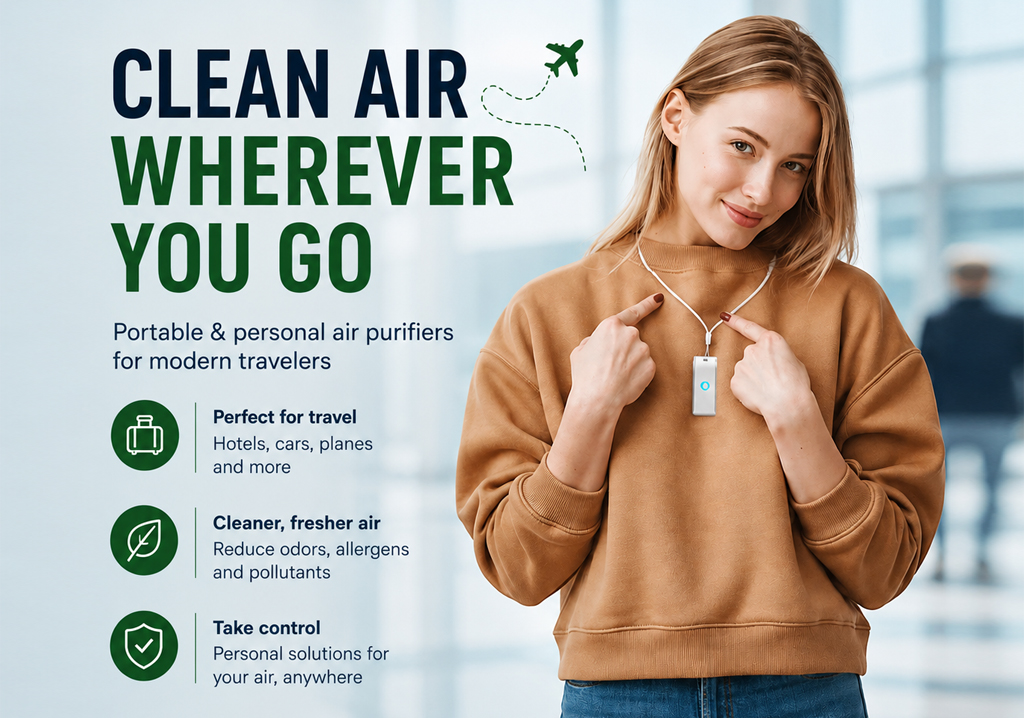
Travel gives you a lot of freedom.
But there is one thing you usually don't get to choose: the air inside the places where you stay and travel.
You can choose the hotel, apartment, rental car, or destination. You can read reviews and check photos before booking. But once you arrive, you have little control over how the room was ventilated, what products were used for cleaning, whether previous guests smoked, or how well the vehicle's air-conditioning system is maintained.
For some travelers, these details are barely noticeable.
For others, they can make a big difference.
A room that smells of stale smoke. A rental car with lingering odors. A stuffy hotel room with poor ventilation. A long flight followed by hours in unfamiliar indoor environments.
This is why portable and personal air-treatment devices are becoming a practical addition to a travel kit.
They don't replace ventilation, cleaning, or good travel habits. But they can give you something that is otherwise difficult to have when you're constantly moving from one environment to another: a little more control over the air around you.
Your Hotel Room May Be Clean Without Feeling Fresh
A hotel room can look perfectly clean and still have an unpleasant indoor environment.
The carpet may have absorbed years of odors. Upholstered furniture can retain smoke or food smells. Cleaning products may leave behind strong chemical odors. Air conditioning can circulate stale indoor air.
And you usually don't know what happened in the room before you arrived.
The same applies to vacation rentals.
One property may feel fresh and well ventilated. Another may have been closed for several days before your arrival. A third may have been occupied by pets or exposed to cooking odors that linger long after the guests have left.
You don't necessarily need to assume that the room is "dirty."
The more realistic point is that temporary accommodations come with an indoor environment you did not choose or control.
That makes a portable air-treatment device useful for some travelers.
Think of Air Quality as Part of Your Travel Gear
Most people have a travel checklist.
Passport.
Phone charger.
Toiletries.
Medications.
Headphones.
Maybe a power bank.
For travelers who are sensitive to unfamiliar indoor environments, an air-treatment device can become another practical item on that list.
The important thing is to choose the right type.
You don't necessarily need a large appliance designed for an entire house.
You need something that matches the environment you're actually going to use it in.
That usually means thinking about three situations:
Where will you sleep?
How will you get around?
How much time will you spend in shared indoor spaces?
Those three questions can lead to very different solutions.
The Three Air Environments Travelers Deal With
Travel isn't one environment.
It is a sequence of environments.
You may start the morning in a hotel room, spend an hour in a rental car, sit in a restaurant, board an airplane, and finish the day in another hotel.
A useful travel air-quality strategy therefore has to consider the environment rather than simply the destination.
1. Your Personal Space
This is the smallest environment, but also the one where portability matters most.
You may be sitting on a train, working at a desk, waiting in an airport, attending a class, or sitting in a theater.
You can't bring a room-sized purifier with you.
This is where a wearable or personal air-treatment device can make more sense.
2. A Small Enclosed Space
Think hotel rooms, offices, cabins, or other compact indoor spaces.
Here, you have more room for a portable device, and the goal is no longer just personal portability.
You want something capable of operating in the surrounding space.
3. Your Vehicle
Cars deserve their own category.
You can spend a surprising amount of time inside a vehicle during a road trip or even a normal business trip.
The cabin is enclosed, and the air can carry odors, particles, and pollutants from the road or ventilation system.
A device designed specifically for vehicle use is therefore more practical than trying to adapt a larger home purifier.
Why Portable Air Treatment Makes Sense for Frequent Travelers
A permanent home purifier works in one location.
Travelers have the opposite problem.
They keep changing locations.
That means buying a purifier for every hotel room clearly isn't practical.
Portability changes the equation.
One device can travel with you and be used in multiple environments.
That makes the most useful travel purifier less about maximum size or maximum power and more about:
- Portability
- Ease of use
- Power requirements
- Battery life, when applicable
- Size
- Weight
- Intended coverage
- Maintenance
- The technology used for air treatment
A device that is excellent at home may be completely impractical in a suitcase.
A tiny personal device may be perfect for a train or airplane but insufficient for a hotel room.
The best travel solution is the one that matches the environment.
Two Ways to Take Air Treatment With You
There are two particularly useful approaches for travelers.
The first is personal air treatment.
The second is portable room or vehicle air treatment.
EcoQuest offers products that illustrate these two approaches particularly well.
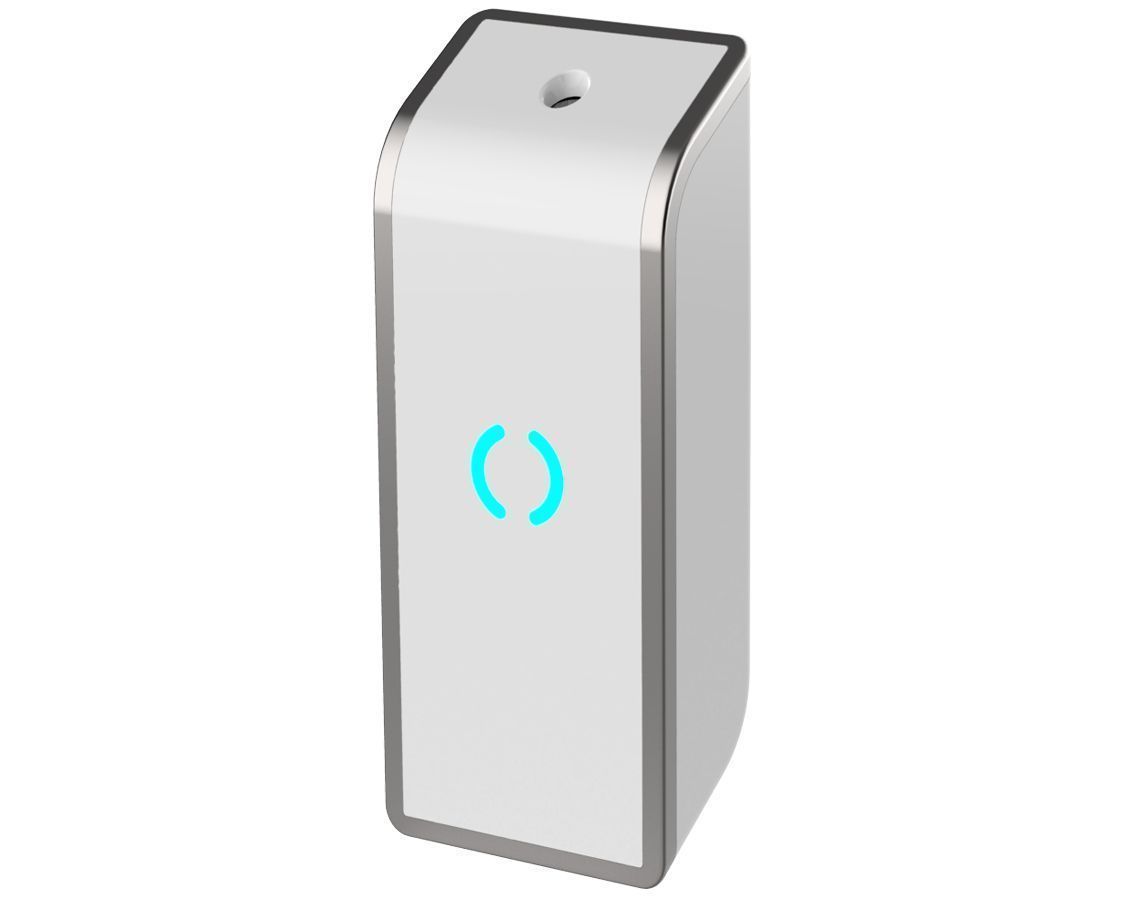
EcoShield by LT&B: Personal Air Treatment You Can Wear
EcoShield by LT&B is a wearable air purifier designed for personal use rather than for treating an entire hotel room.
The compact device uses needlepoint ionization and TriOxygen technology and is designed to provide air treatment within a personal area around the user. EcoQuest lists a weight of just 25 grams and more than 18 hours of operation on a full battery charge.
It can be worn with the included neck strap or attached to clothing using its built-in clip. The manufacturer specifically lists environments such as buses, trains, theaters, airplanes, classrooms, and malls as potential applications.
That makes EcoShield particularly interesting for travelers because it doesn't require you to carry a separate room-sized appliance.
Best suited for: flights, trains, airports, public transportation, offices, classrooms, theaters, and other shared indoor environments.
Learn More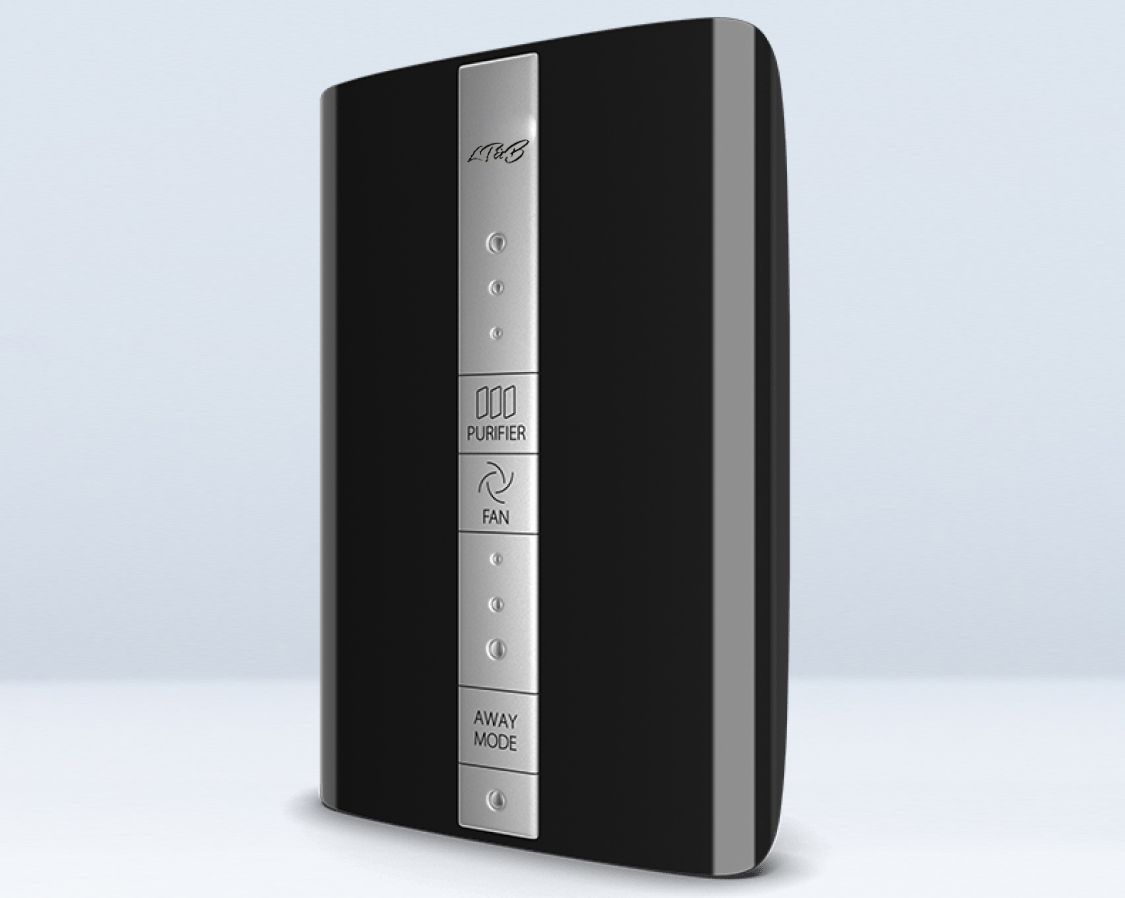
Voyager: A Portable Solution for Cars and Travel
EcoTravel Voyager Portable Car Air Purifier takes a different approach.
It is primarily designed for vehicles, where its compact size and 12-volt power supply make it easy to integrate into a car or truck.
Voyager uses Active-Ox technology together with needlepoint bipolar ionization and UV technology. The manufacturer also describes it as suitable for other environments such as hotel rooms, offices, boats, kitchens, and bathrooms when mains power is available.
For travelers, that makes Voyager especially useful during road trips.
Instead of carrying one device for the hotel and another for the car, you can use the same compact unit in different environments, depending on the available power source and intended application.
Best suited for: rental cars, personal vehicles, road trips, trucks, hotel rooms, offices, and other compact spaces.
Learn MorePersonal vs. Portable: Which Approach Makes More Sense?
The difference between these two categories is easy to understand.
Choose personal air treatment when:
- You spend most of your time in shared indoor environments
- You want something extremely small
- You need a device you can wear
- You travel frequently by plane, train, or public transportation
- You don't want another appliance in your luggage
Choose a portable room or vehicle purifier when:
- You spend significant time driving
- You take road trips
- You want to treat the surrounding space rather than only your immediate personal area
- You stay in hotels or other compact accommodations
- You have access to an appropriate power source
And there is no rule saying you have to choose only one approach.
For a frequent traveler, personal and portable air treatment can serve completely different purposes.
Your Car Is Part of Your Travel Environment
Road trips introduce a problem that is easy to overlook.
Your car becomes your temporary room.
You may spend six, eight, or even ten hours inside it during a long driving day.
The cabin can accumulate odors from food, drinks, pets, smoke, and other sources. Outdoor pollutants can also enter through the ventilation system.
The situation becomes even more relevant for rideshare drivers and people who spend most of their working day behind the wheel.
This is where a vehicle-specific purifier can be much more practical than a conventional home unit.
Voyager is designed specifically around this use case, with a compact form factor and 12-volt power. Its listed applications include automobiles, trucks, hotel rooms, and office cubicles.
What About Airplanes?
Air travel deserves a slightly different approach.
A portable purifier cannot give you control over an entire aircraft cabin.
And a personal device should never be treated as a substitute for the aircraft's ventilation system.
The practical value of a wearable air-treatment device during air travel is therefore different from using a purifier in a hotel room.
The goal is not to "purify the airplane."
It is to have a compact personal air-treatment device that can accompany you through airports, transportation, waiting areas, and other shared environments where you have little control over the surrounding air.
EcoShield is specifically designed around this personal-use concept and is small enough to wear or clip to clothing.
Always follow the operating rules of airlines and other transportation providers when traveling with powered electronic devices.
Hotels: Don't Forget the First Few Hours
One of the most useful times to think about indoor air quality is immediately after arriving at your accommodation.
Before unpacking everything, take a few minutes to assess the room.
Notice:
- Does the room smell fresh?
- Is there a noticeable smoke or perfume odor?
- Does the air feel stale?
- Is the HVAC system running?
- Are there obvious signs of moisture?
- Does the room feel excessively stuffy?
If the room has an unpleasant odor or other obvious problem, don't expect a purifier to solve the underlying cause.
Ask the hotel or property manager about the issue when appropriate.
A purifier can complement good ventilation and source control, but it isn't a replacement for fixing a serious moisture, smoke, or sanitation problem.
Don't Forget About Humidity
Travelers often focus on pollutants and odors but overlook humidity.
Hotel rooms, cabins, RVs, and vacation rentals can have very different humidity levels from what you're used to at home.
A room can feel uncomfortable because it is too dry or too humid, and an air purifier doesn't solve either problem.
If you're staying somewhere for several days, consider the broader indoor environment:
Air quality + temperature + humidity + ventilation
These factors work together to determine how comfortable a room feels.
If you notice persistent condensation, dampness, or a musty smell, address the moisture problem rather than relying on an air purifier alone.
What Should You Pack in a Travel Air-Quality Kit?
You don't need to turn your suitcase into a laboratory.
A practical setup can be surprisingly simple.
For hotel stays
Bring a compact air-treatment device if you regularly stay in unfamiliar accommodations.
For road trips
Consider a purifier designed for vehicle use.
For flights and public transportation
A wearable or personal device is easier to carry and use than a conventional portable room purifier.
For longer stays
A portable room purifier can make more sense if you're staying in one place for several days or weeks.
Always pack the right power accessories
Before leaving, check whether your device requires:
- USB charging
- AC power
- 12-volt vehicle power
- A specific adapter
This small step can prevent a lot of frustration when you arrive.

A Few Things a Travel Purifier Cannot Do
It is important to keep expectations realistic.
A portable air purifier cannot:
- Fix a mold problem inside a building
- Replace ventilation
- Remove the source of cigarette smoke
- Correct excessive humidity
- Replace normal cleaning
- Make every environment completely contaminant-free
Think of it as an additional layer of air treatment, not a guarantee that every indoor environment will become perfectly clean.
That distinction matters.
The most effective strategy is still to address pollution at the source whenever possible.
How to Choose Without Overpacking
The temptation when preparing for a trip is to buy the most powerful device you can find.
That isn't necessarily useful.
Instead, start with your travel habits.
If you fly frequently
A lightweight personal device may be the most convenient option.
If you drive frequently
A vehicle-oriented purifier is likely to be more useful.
If you spend weeks in hotels or rentals
A portable room purifier may justify the additional luggage space.
If you travel in several different ways
A combination of personal and portable solutions may provide the most flexibility.
The best travel purifier isn't the one with the longest list of features.
It's the one you'll actually bring with you and use.
Travel Changes. Your Air-Treatment Strategy Can Change With It.
A business traveler staying three nights in a hotel has different needs from a family taking a two-week road trip.
A digital nomad working from apartments has different needs from someone who spends most of the day on airplanes and trains.
That's why portability is only the beginning.
The more important question is:
Where will you actually spend your time?
If your answer is "mostly in shared spaces," personal air treatment may make more sense.
If it's "mostly in a car," choose a vehicle-oriented device.
If it's "mostly in hotels and vacation rentals," consider something designed to treat the room.
A Simple Travel Air-Quality Checklist
Before leaving:
- Check the air-quality conditions at your destination when relevant.
- Make sure your purifier is clean and ready to use.
- Fully charge battery-powered devices.
- Pack the correct charging cables and adapters.
- If you're driving, check whether the device is compatible with your vehicle's power supply.
When you arrive:
- Check the room for obvious odors or moisture.
- Use normal ventilation when outdoor conditions are favorable.
- Identify and report serious problems rather than trying to cover them up with an air purifier.
- Place your portable purifier where it can operate according to the manufacturer's instructions.
During the trip:
- Keep the device maintained according to its instructions.
- Don't block air intakes or outlets.
- Don't assume that more intense operation is always better.
- Follow the manufacturer's safety instructions, especially for devices using ozone or oxidation-based technologies.
Final Thoughts
Travel means giving up control over many things.
You don't control who stayed in the hotel room before you.
You don't control how the rental car was used.
You don't control the ventilation in an office, train, or waiting area.
But you can control what you bring with you.
That's where portable and personal air-treatment devices can make sense.
EcoShield by LT&B is built around personal portability, giving travelers a lightweight wearable option for shared indoor environments and situations where carrying a conventional purifier isn't practical.
EcoTravel Voyager Portable Car Air Purifier takes a different approach, focusing primarily on vehicles while remaining portable enough for use in hotels, offices, and other compact environments.
Neither approach is a replacement for good ventilation, cleaning, or fixing the source of an indoor-air problem.
But when you're constantly moving from one environment to another, having a portable air-treatment option can be a practical way to add another layer of control to your travel routine.
Because your destination may change every few days.
Your approach to cleaner air doesn't have to.